
SGroup Executive Committee
Role and Responsibilities
The Executive Committee serves as the strategic and operational governing body of the Association, overseeing the implementation of the SGroup Action Plan and ensuring the execution of decisions taken by the General Assembly. It also acts as the main advisory body to the President.
Eligibility
Diversity in the profiles of its members, including gender and geographical balance, balance of academic and administration expertise, as well as national and institutional rotation, shall be promoted in its composition. To ensure such diversity, the EC shall not have more than one member from a given country. Current EC members are not eligible to serve as Think Tank Coordinators or hold any other coordination role while serving as EC members. Former EC members are welcome to become Think Tank Coordinators and have an active role in the initiatives of the Think Tank Academy. General Assembly Representatives, Liaison Officers, as well as University Administrators and Academics, are eligible to serve as Executive Committee members.
Composition
The Executive Committee consists of seven members elected by the General Assembly (during the Internal Business Meeting) from among representatives of European/Full Member institutions. The President of the Association shall serve as one of the seven members of the Executive Committee.
Terms of Office
Each elected member shall serve a term of two years and may be re-elected for up to two consecutive additional terms of two years each (maximum six years).
Nomination and Election Processes
A formal call for nominations shall be issued at least two calendar months prior to the General Assembly meeting at which elections will take place. The outgoing Executive Committee may include its own nominations in the official call. Other nominations must be submitted in writing to the Head Office of the Association no later than one calendar month prior to the General Assembly. Each nomination must be made by a representative of a European/Full Member institution and must state that the assent of the nominee has been obtained. If fewer nominations are received than those required to fill available seats, the Executive Committee may submit additional nominations with the nominees’ consent prior to the election. In all cases, the election shall be conducted by secret ballot at the General Assembly (during the Internal Business Meeting).
Meetings
The Executive Committee meets at least three times per calendar year, either in person or via virtual means, to ensure continuity of governance and effective coordination of the Association’s activities. The home institution of each Executive Committee member shall be responsible for covering the travel and accommodation expenses incurred in connection with their participation in Executive Committee meetings.
Key Functions
The Executive Committee is responsible for:
- Drafting and executing the annual SGroup Action Plan;
- Preparing the annual Calendar of Activities;
- Proposing new membership applications to the General Assembly;
- Presenting the Annual Activity Report, the Financial Report, and the forthcoming Budget to the General Assembly;
- Proposing new initiatives, partnerships, and internal regulations as needed.
Termination of Mandate
The mandate of a member of the Executive Committee shall be deemed terminated under any of the following circumstances:
- Upon completion of the designated term of office;
- Upon voluntary resignation, submitted in writing to the President of the Association;
- By decision of the General Assembly to revoke the mandate;
- In the event that the member’s home institution ceases to cover the travel and accommodation expenses related to participation in Executive Committee meetings, as outlined under Section f. Meetings;
- If the member’s home institution withdraws its institutional and/or financial support to the Association, including, but not limited to, failure to pay the annual membership fee;
- If the member’s home institution ceases to be a member of the SGroup Association.
Current Executive Committee members:
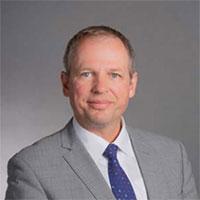 |
Arnim HeinemannPresident EC Role: Casa SGroup University of Bayreuth (Germany) Dr Arnim Heinemann is a senior executive and academic leader with extensive expertise in international education, currently being President of the SGroup – Universities in Europe. In this role, he contributes to advancing the group's mission of fostering inter-university cooperation across Europe and beyond. His work underscores his commitment to leveraging education as a transformative force on a global scale. Additionally, he is a prominent figure in international education networks, often speaking and representing his work at major events like the European Association for International Education (EAIE), the Association of International Education Administrators (AIEA), and NAFSA, among others. |
 |
Kathleen O'ConnorVice-President EC Role: Action Plan University of Lille (France)
|
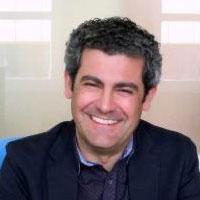 |
Rafael de Paz UreñaEC Role: Secretary of the Executive Committee (Official and legal documents, Contacts w/ Spanish Ministry); Internal Projects (ICON, PhD CUP, BIPs, Train the trainers, etc.) University of Léon (Spain) Rafael De Paz Urueña holds a Bs.A. in Law and a Master's in Advanced Studies in European Integration Law from the Universidad de Alcalá, Madrid. He is the current Director of the Office for International Projects at the Universidad de León, a role he has held since January 2014. In this capacity, he focuses on the information, conception, implementation, and financial management of non-research international projects, including those for innovation, good practices, and internationalisation. He has extensive experience in international relations within Higher Education, having previously served as the Director of the Service for Internationalisation at the Universidad de León. His work has revolved around the Erasmus Programme since 1991, encompassing the development of ECTS tools and the internal organisation of academic recognition networks, and the expansion of EU higher education structures to third countries (Morocco, Algeria and Tunisia). As from 2026, he will in addition play the role of executive manager of a newly awarded EUROPEDIRECT CENTER (2026-2031) at Universidad de León. His mother tongue is Spanish, and he is a proficient user (C2) of English and French, and an independent user (B2) of German. |
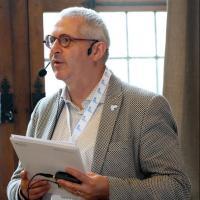 |
Frederik De DeckerEC Role: SGroup Identity Ghent University (Belgium) He participates regularly as an expert in international projects, mainly dealing with innovation in internationalisation, educational development, qualifications frameworks and quality assurance. Topics he frequently addresses as an (invited) speaker at conferences and publishes regularly about. He also chairs and participates in various advisory boards re. these themes at the Flemish level, e.g. the Working Groups on internationalisation of the Flemish Education Council (Council for Higher Education) and the Flemish Interuniversity Council. Frederik is a member of the Board of directors of ENLIGHT European University and member of the Executive Committee of the SGroup of European universities. His special interests are the concept of (international/intercultural) learning outcomes/competences; micro-credentials; inclusive mobility and responsible internationalisation. |
 |
Joanna MisiukajtisEC Role: SGroup Events (SGroup Café, Staff Week, TTAcademy, Annual Meetings); TTPhD and EU Projects University of Szczecin (Poland) Dr Joanna Misiukajtis had been the Head of International Relations Department at the University of Szczecin since 2010. |
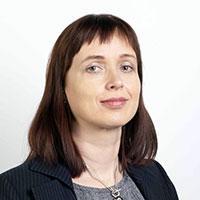 |
Rūta JankauskienėEC Role: Membership Recruitment; Communication Strategy (Newsletter, Social Media, Website) Kaunas University of Technology (Lithuania) Rūta Jankauskienė is an international relations officer with over 27 years of work experience in the higher education sector. Her expertise covers the implementation of the Erasmus+ mobility projects, international collaboration, activities with international academic networks, coordination of international events as well as leadership for managing delegated end-to-end creation of different project deliverables.
|
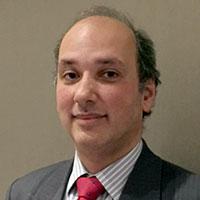 |
Stephen Wallis EC Role: SGroup Membership and Partnership Policy and SGroup Development Strategy University of Westminster (United Kingdom) Stephen Wallis is Director of Transnational Education and Global Engagement at the University of Westminster. Alongside this role, he is currently supporting the University’s partnership with Westminster International University in Tashkent, Uzbekistan as Interim First Deputy Rector (Academic). Stephen has strategic responsibility for overseeing all of the University’s transnational education partnerships and advises the University’s Executive Board on opportunities to strengthen existing collaborations and develop new global partnerships. He also oversees the University’s Global Mobility operations, including relating to the Turing Scheme, and manages the international partnership network. With over twenty years’ experience in higher education, Stephen has held a number of senior roles, including Director of International at De Montfort University and Acting Director at the University of Kent. He has also served for a number of years as an assessor on the Chevening Reading Committee. Stephen holds a BA in Ancient History and an MA in Ancient Social and Cultural History from the University of Reading. |